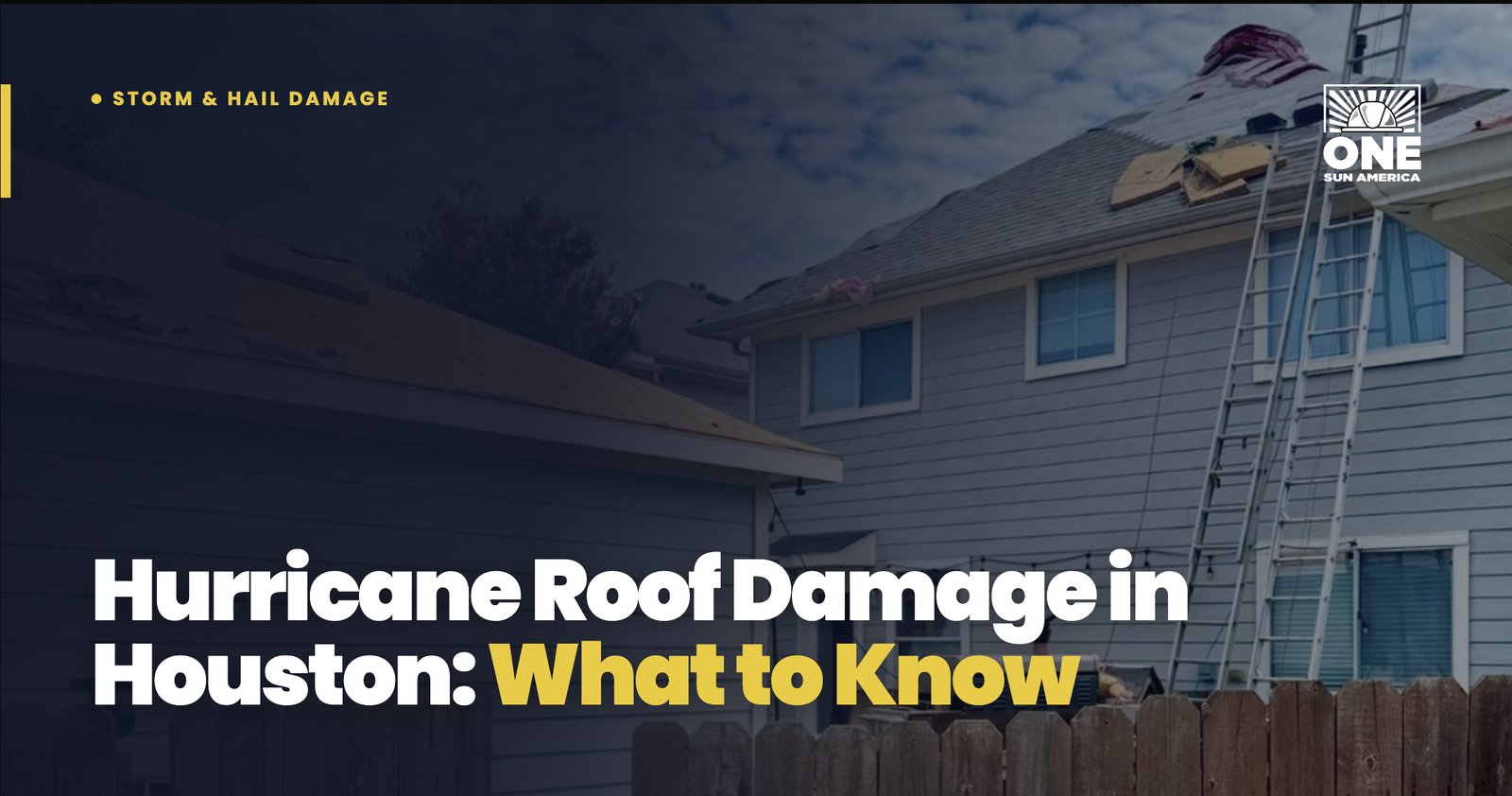
Houston is one of the most hurricane-prone metro areas in the United States. When a storm makes landfall or passes nearby, roof damage can range from a few missing shingles to full structural failure — and what you do in the first 24 to 72 hours after the storm matters enormously for your home's protection and your insurance claim.
This guide walks you through every step, in order, so you don't miss anything that could cost you later.
Step-by-Step: The First 72 Hours
Stay Safe — Don't Access the Roof Yet
After a hurricane, structural damage may not be obvious from the outside. Saturated decking, weakened trusses, and debris on the roof make it dangerous. Wait until skies are clear and conditions are safe before any exterior inspection — and never get on the roof yourself.
Document Everything With Photos and Video
Before touching, moving, or cleaning up anything, document the full extent of damage with your phone. Photograph the roof from every angle you can safely access from the ground, all visible interior damage (water stains, wet drywall, damaged ceilings), and any personal property affected. Timestamp matters — do this before any cleanup begins.
Cover Exposed Areas With Tarps Immediately
If you have missing shingles or visible holes, cover them with tarps as soon as it's safe. This is called emergency mitigation — it's your responsibility as a homeowner to prevent further damage. Insurance companies can reduce or deny claims for secondary damage (water intrusion, mold) that occurred because a homeowner failed to take reasonable protective measures. Save receipts for any tarps or emergency materials you purchase.
Call Your Insurance Company to Open a Claim
Call as soon as it's safe — ideally within 24 to 48 hours. When you call, have your policy number ready, the date and nature of the storm, and your preliminary documentation. Get a claim number before ending the call. Ask when an adjuster will be assigned and what your policy's timeline is for inspections.
Get a Professional Inspection Before the Adjuster Arrives
This is the step most Houston homeowners skip — and it's one of the most important. A licensed contractor who inspects your roof before the insurance adjuster can document the full scope of damage with photos and measurements. This gives you an independent assessment to compare against the adjuster's report, and helps ensure nothing is missed or underpaid.
Be Present During the Insurance Adjuster's Inspection
Do not leave an adjuster on your property unsupervised. Walk the roof with them (or have your contractor present). If damage is found that wasn't in the adjuster's initial report, your contractor can help document it for a supplement later. You have the right to disagree with an adjuster's findings and request a re-inspection or appraisal.
Review the Insurance Estimate Before Signing Anything
Your insurance company will send an estimate (called a scope of loss or damage report). Review it carefully with your contractor. Common omissions include code upgrades required by current Houston building codes, damaged accessories like pipe boots and vents, and interior water damage related to the roof failure. Items missed in the initial estimate can often be supplemented.
Choose Your Contractor Carefully
After every major Houston storm, out-of-state contractors flood the area. Choose a licensed, insured, local contractor with a verifiable track record. Ask for their Texas contractor license number, proof of insurance, and local references. Do not pay more than 10–15% upfront as a deposit — full payment before work is a red flag.
What NOT to Do After a Hurricane Damages Your Roof
- Don't sign an Assignment of Benefits (AOB): This document transfers your claim rights to the contractor. Reputable contractors don't need it.
- Don't let a contractor file your claim for you: Only a licensed public adjuster can represent you in an insurance claim. Contractors can help document damage but cannot negotiate your claim.
- Don't accept the first offer without review: Initial insurance estimates are often incomplete. You have the right to request supplements for missed items.
- Don't delay repairs too long: If secondary damage (water intrusion, mold) occurs after the storm because of unaddressed roof damage, insurance may attribute it to neglect rather than the storm.
- Don't use a contractor who offers to waive your deductible: This is a violation of the Texas Insurance Code and a serious red flag about the contractor's practices.
Know your rights in Texas: You have the right to choose your own contractor. You have the right to a second opinion on your insurance estimate. You have the right to an appraisal process if you disagree with your insurer's valuation. One Sun America can help you understand all of these.
The Typical Timeline After a Hurricane Claim in Houston
- Day 1–2: Document damage, tarp exposed areas, call insurance to open claim
- Day 3–5: Get independent contractor inspection; receive claim number
- Week 1–2: Insurance adjuster inspects property
- Week 2–3: Receive insurance estimate (scope of loss)
- Week 3–4: Review estimate with contractor; submit supplements if needed
- Week 4–6: Receive ACV check; schedule work
- Week 6–8: Work completed; contractor submits completion documentation
- Week 8–10: Receive recoverable depreciation check (if applicable)
This timeline can be shorter or longer depending on storm volume, adjuster availability, and supplement negotiations. One Sun America has guided Houston homeowners through this process after Harvey, Beryl, and multiple other major storm events.